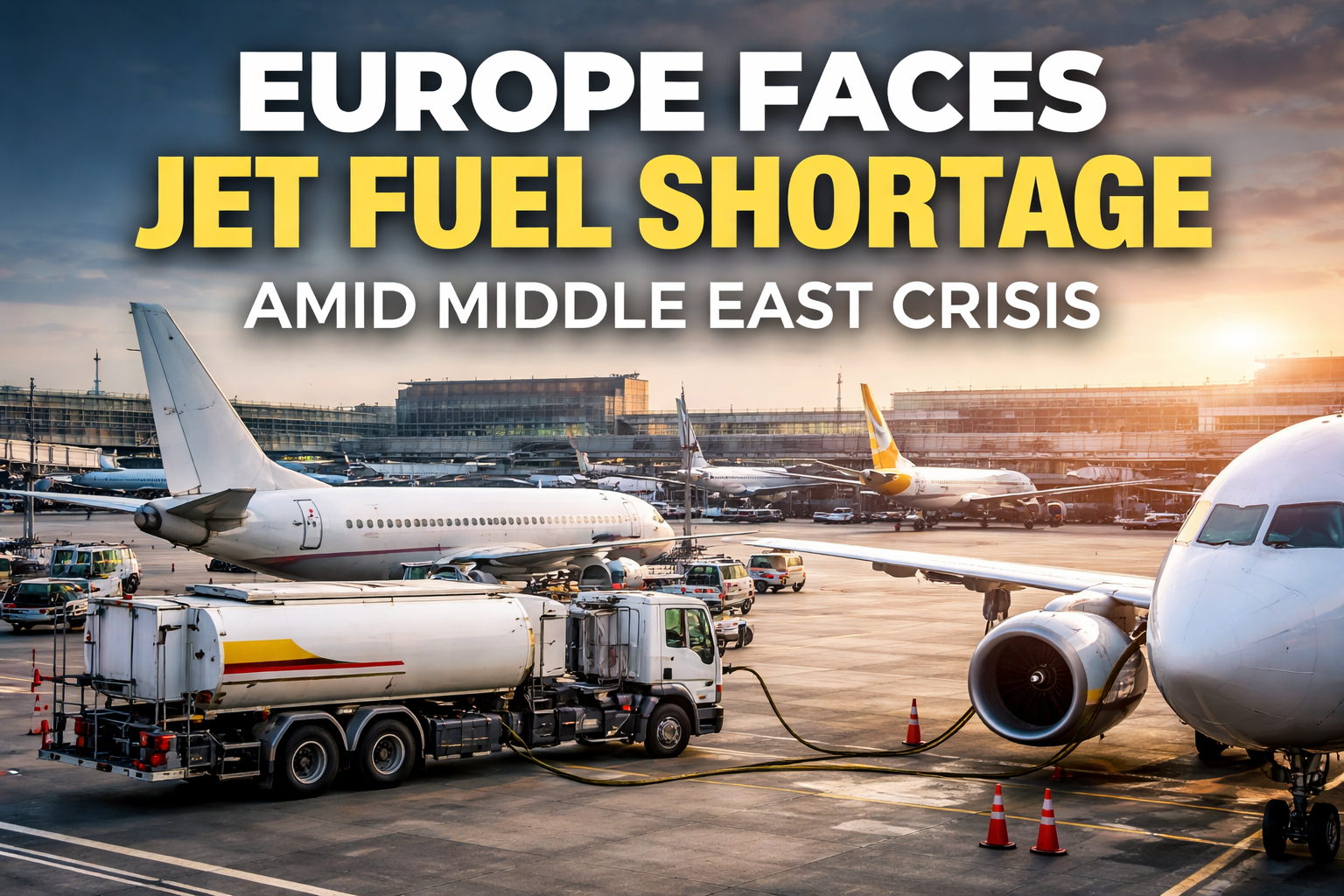
Europe’s aviation sector is facing growing concerns over a possible jet fuel shortage, as ongoing geopolitical tensions in the Middle East continue to disrupt global energy supply chains.
Airport authorities across Europe have warned that fuel availability could become critically low within weeks if the situation does not improve.
⚠️ Supply Disruptions Raise Alarm
Industry body Airports Council International Europe has cautioned that a system-wide fuel shortage could emerge within three weeks if shipping routes are not restored.
The warning comes at a crucial time, with Europe preparing for its peak summer travel season when demand for flights is at its highest.
🌍 Role of the Strait of Hormuz
At the center of the crisis is the Strait of Hormuz — one of the world’s most important energy corridors.
A significant portion of global oil and jet fuel passes through this narrow waterway. However, ongoing conflict and military tensions in the region have severely reduced tanker movement, disrupting fuel supplies worldwide.
Europe is particularly vulnerable, as a large share of its jet fuel imports depend on this route.
⛽ Impact on Europe’s Aviation Sector
Experts warn that continued disruption could lead to:
- Reduced availability of jet fuel at major airports
- Flight delays and cancellations
- Increased operational costs for airlines
Some airlines have already begun adjusting flight schedules as fuel prices rise and supply becomes uncertain.
📈 Rising Costs and Economic Pressure
The ongoing crisis has also pushed fuel prices higher, adding financial strain on airlines and potentially leading to increased ticket prices for passengers.
According to industry experts, even if supply routes reopen soon, full recovery could take several months due to the scale of disruption.
🌐 Wider Impact Beyond Aviation
The issue is not limited to airlines. The disruption in fuel supply is contributing to broader economic challenges, including:
- Increased transportation and logistics costs
- Rising inflation across sectors
- Pressure on tourism and travel industries
The situation highlights Europe’s dependence on imported energy and its vulnerability to geopolitical instability.
🔮 What Lies Ahead?
The future of Europe’s aviation fuel supply largely depends on the stability of the Middle East and the reopening of key shipping routes.
Until then, airports, airlines, and governments are closely monitoring the situation and preparing for possible disruptions during one of the busiest travel periods of the year.
✅ Source
This article is based on publicly available reports other industry sources.
https://www.cnbc.com/2026/04/10/jet-fuel-shortage-european-airports-strait-of-hormuz.html